
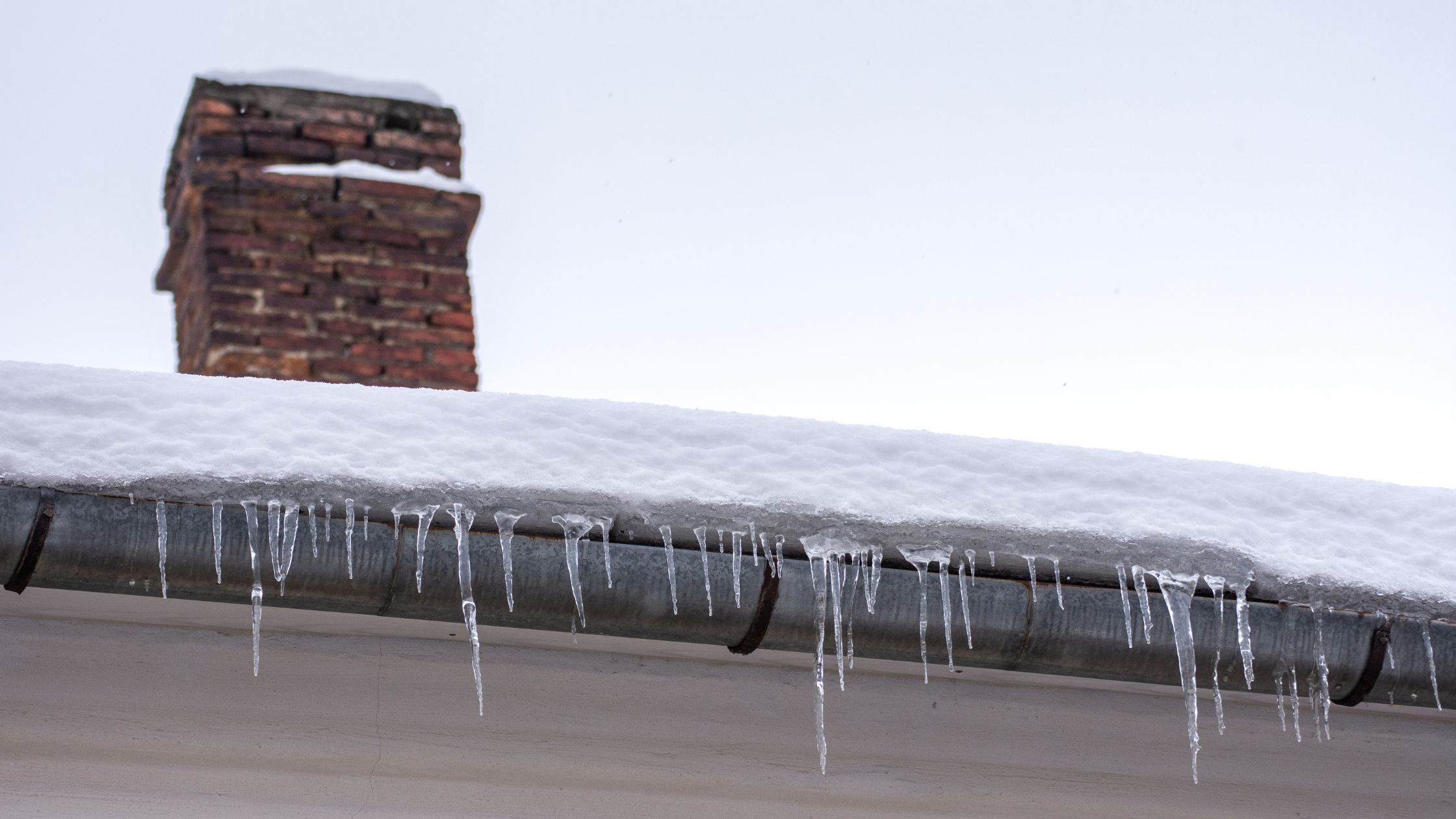
Every Michigan winter, a thick ridge of ice builds up along the edge of countless roofs — and behind those pretty icicles is one of the most common causes of winter roof leaks. Learning how to prevent ice dams on your roof can save you from stained ceilings, soggy insulation, and expensive repairs. Here is what causes them and exactly how to stop them before the snow flies.
What is an ice dam?
An ice dam is a ridge of ice that forms at the edge (the eave) of your roof and prevents melting snow from draining off. The water that backs up behind the dam has nowhere to go, so it works its way under your shingles and into your home. In our Detroit-area climate, with long stretches of freezing temperatures and repeated snowfalls, the conditions for ice dams are nearly perfect.
How ice dams form
Ice dams come down to one thing: an uneven roof temperature. When the upper part of your roof is warmer than the eaves, you get a melt-refreeze cycle that builds ice exactly where you don’t want it.
The warmth usually comes from heat escaping your living space into the attic — through gaps around light fixtures, poor insulation, or leaky ductwork. That heat melts the underside of the snow layer, the water runs down to the cold overhang, and it freezes solid. Repeat that for a few days and the dam grows large enough to force water under your shingles.
How to prevent ice dams on your roof
The good news is that ice dams are largely preventable, and most of the fixes also lower your heating bills. Focus on keeping your roof deck uniformly cold:
- Seal attic air leaks. Close gaps around can lights, the attic hatch, plumbing stacks, and wiring so warm air stays in your living space.
- Add attic insulation. Michigan homes benefit from a deep, even layer of insulation on the attic floor to keep heat out of the attic.
- Improve attic ventilation. Balanced soffit and ridge vents let cold outside air flush warm air out, keeping the whole roof deck near the outdoor temperature.
- Keep gutters clear. Clean gutters and downspouts before winter so meltwater can actually drain.
- Consider ice-and-water shield. When you re-roof, a self-adhering membrane along the eaves is a powerful backup layer. It is standard on quality Michigan roof installations.
What NOT to do
Please don’t climb onto an icy roof with a hammer or hatchet — you can injure yourself and damage the shingles, creating new leaks. Rock salt in a sock can stain and corrode, and it rarely solves the underlying problem. A roof rake used carefully from the ground to pull snow off the lower edge can help in a pinch, but the real fix is addressing attic heat and ventilation.
When to call a professional
If you already have water stains on your ceiling, ice pushing up under your shingles, or a leak in progress, it is time to bring in a pro. Our roof leak repair team can stop active water intrusion, and for urgent winter emergencies we offer emergency roofing services across Metro Detroit. We can also inspect your insulation and ventilation to fix the root cause so next winter is worry-free.
Quick fixes vs. permanent solutions
When an ice dam is already forming, a roof rake used from the ground to clear the lower few feet of snow can reduce the immediate risk, and a licensed professional can steam a dam off safely without damaging shingles. Those are short-term measures, though. The permanent fix is always to address why your roof is warm in the first place — sealing attic air leaks, adding insulation, and balancing ventilation so the entire roof deck stays cold.
Think of it this way: chipping ice off the eaves treats the symptom, while air-sealing and insulating your attic cures the cause. Homeowners who invest in the permanent fix usually see lower energy bills too, so it pays for itself over time.
Frequently asked questions
Are big icicles a sign of an ice dam?
Often, yes. A few small icicles can be harmless, but large icicles hanging from the eaves usually mean meltwater is refreezing at the roof edge — the same process that forms damaging ice dams.
Will adding insulation alone stop ice dams?
Insulation helps, but it works best combined with air sealing and proper attic ventilation. All three together keep the roof deck uniformly cold, which is what actually prevents ice dams.
Should I remove an ice dam myself?
We don’t recommend climbing onto an icy roof — it’s dangerous and easy to damage shingles. A roof rake from the ground is safer, and for an established dam it’s best to call a professional.
Worried about ice dams this winter?
Let T&M Roofing inspect your attic ventilation and roof edge before the snow builds up. Catching it early beats repairing water damage later.
Get a Free Estimate or call (313) 600-4538
Whether you are in Detroit, Royal Oak, or Grosse Pointe, a quick pre-winter roof check is one of the cheapest ways to avoid a very expensive surprise.